Magimica
Turn one goal into a day-by-day plan — and actually get it done.
Jidé Tidjani-Serpos /
AI-native product builder
I frame the problem, direct the system and remain accountable for what ships. AI compresses the work between those decisions.
Strategy × design × engineering × agents
Define what matters. Design the system. Inspect what ships. Then let real use change the next decision.
Ship → Observe → Learn → Reframe
01 / Products
Five products in production. Five themes. Implementation is no longer the constraint: each experiment answers a question about building in the age of AI.
Turn one goal into a day-by-day plan — and actually get it done.
Write for five minutes, get scored by four AIs, see where you rank.
A few smart questions turn your rough idea into a sharp AI prompt.
Follow political leaders, get sourced facts, and have your say.
A career coach that shows where you stand — and how to bounce forward.
AI lets independent work run together. Human direction, validation and production feedback keep it coherent.
Four independent missions branch during building, then converge for verification and release. A return path sends work from verification back to building when it needs revision.
04 / In public
On September 30, 2026, I presented this work at a Friends of Figma Montréal evening — the question this portfolio opens with was on the screen behind me. Public presentation exposes the work to professional critique, and the critique feeds the next redesign.
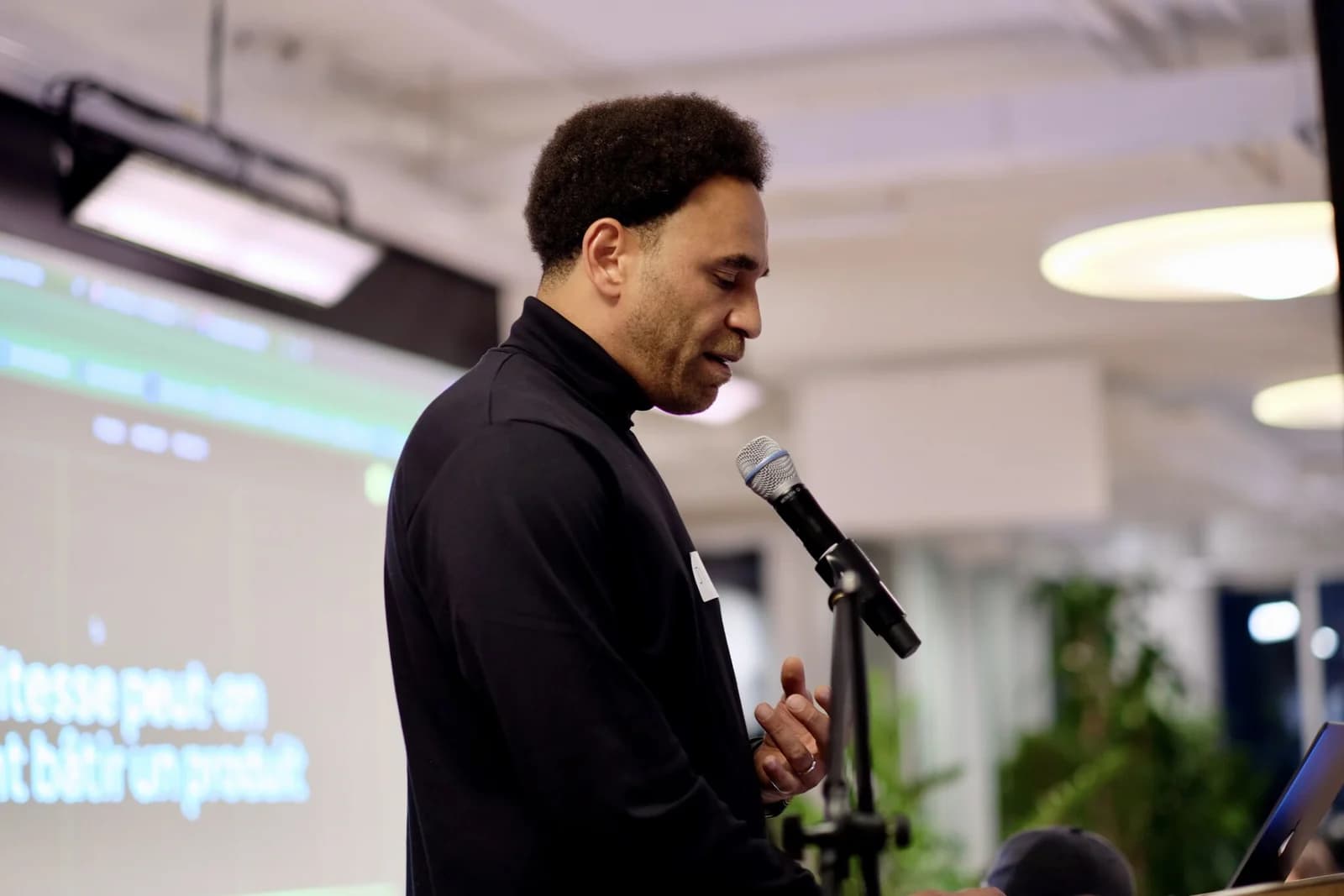
Friends of Figma Montréal, September 30, 2026 — The portfolio in the age of AI.
06 / Background
Fifteen-plus years in product and UX shaped my judgment. Full-stack development and AI agents expanded what I can build.
Strategy, design and engineering now meet in the same work. Shipping tests the implementation. Use, feedback and measurable outcomes test its value.