Help across the application
Agents supported research, architecture, task planning, code, tests, review, debugging and copy.
Experiment 01 / Magimica / 2026
Magimica turns one goal into a day-by-day plan — and helps you actually get it done.
01 / Hypothesis
A small architecture and clear direction could take a useful product from foundations to beta in days. I would remain responsible for its coherence.
BenefitLess planning. More focus.
Risk controlAI changes nothing without your approval.
02 / Bet
Objective → missions → dependencies → schedule → completion. AI suggests tasks. A TypeScript engine calculates points, order, capacity and conflicts.
03 / Division of labour
Agents supported research, architecture, task planning, code, tests, review, debugging and copy.
The concept; the design and generated-image feature; the final QA and level of finish.
04 / Evidence
Model → selective AI → working beta → production fixes → hardening. The sequence shows how the build changed, not whether the market wanted it.
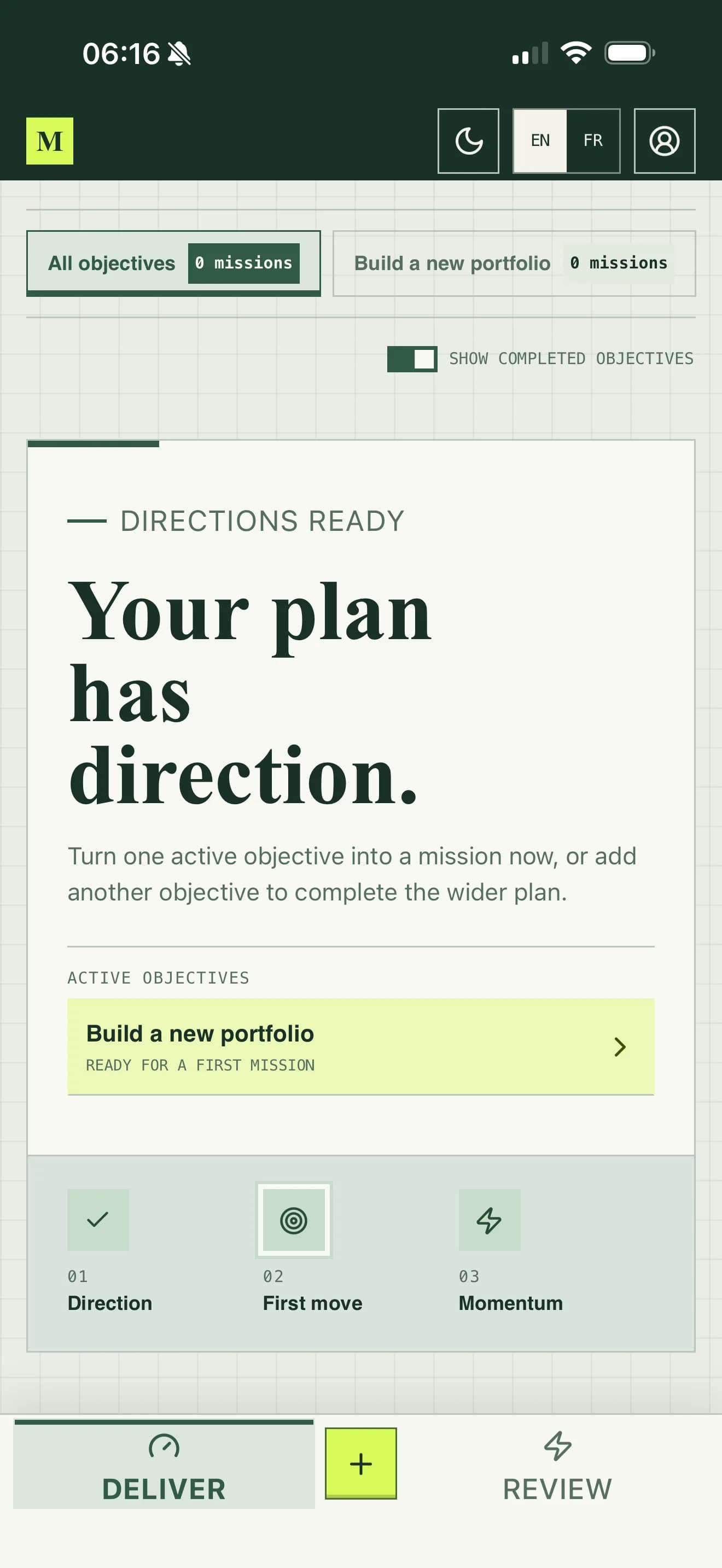
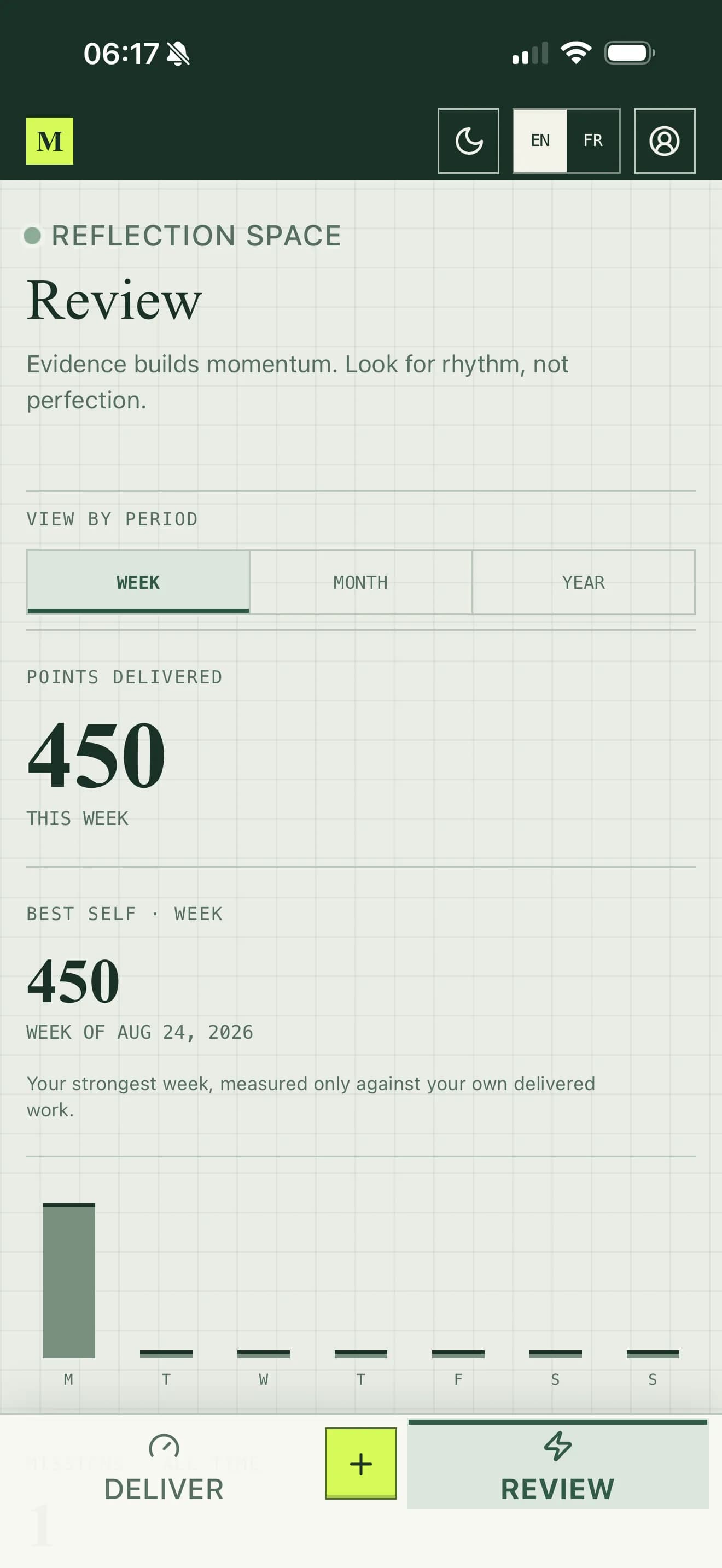
UX, architecture, implementation, QA and deployment advance together, pause for validation and converge into production. Five build days, reconstructed from history.
Objective; UX; Architecture; Code; QA; Deploy; Validation; PRODUCTION; 5 days.
The schema connects users, objectives, missions, dependencies and events.
Generated illustrations arrive without changing the deterministic planning engine.
The full loop works. Database tests, secret scanning and authenticated browser checks follow.
Localization and PWA support arrive alongside CORS, metadata, session and mobile fixes.
Security, forms, deployment, mobile navigation and Safari take the final day.
Source / repository history, dated database changes and first-person account.
Reality check / what speed exposed
Compressed implementation moved the bottleneck to verification. In a later, heavier agentic-QA experiment, systematic orchestration cost roughly twice the time and five times the tokens without consistently better acceptance results. My current rule is proportion: gate rigorously where failure is consequential; elsewhere, ship, observe and repair fast.
Visit Magimica