Where models contribute
Models construct the reading: profile analysis, opportunity comparison, evidence-grounded documents and guidance.
Experiment 05 / Yogimoca / 2026
Professional life increasingly means being interpreted through a deforming mirror. Yogimoca shows something closer to that constructed reading — and what to do next.
01 / Hypothesis
Recruiters, hiring systems, networks and AI all build representations of a person that the person rarely gets to see — while AI unsettles which skills and positions hold value. Yogimoca starts from that asymmetry, for people looking for work and for people simply asking where they stand.
02 / Smallest loop
Share career material: CV, LinkedIn, GitHub, a website or plain words.
Receive an analytical reading: standing, strong evidence, gaps.
Compare the profile against a concrete opportunity.
Act — enrich, reposition, generate documents — and change the next reading.
A core professional profile builds up from several distorting sources: CV, LinkedIn, GitHub, portfolio. Professional opportunities take shape as a tailored sub-profile is built to answer each one.
The professional self; CV; LinkedIn; GitHub; Portfolio; Opportunity 01; Opportunity 02; Opportunity 03.
Core mechanismOne core profile feeds every opportunity; each gets a tailored sub-profile, not a copy.
Control boundarySub-profiles stay grounded in real evidence — tailoring, never invention.
03 / Division of labour
Models construct the reading: profile analysis, opportunity comparison, evidence-grounded documents and guidance.
Users own the evidence and the decisions. I own the boundary: an analytical perspective, never a claim to reproduce an employer’s private screening.
04 / Product evidence
Public production screens. September history records the corrections: value before optional enrichment, centralized profile answers, dedicated application workspaces.
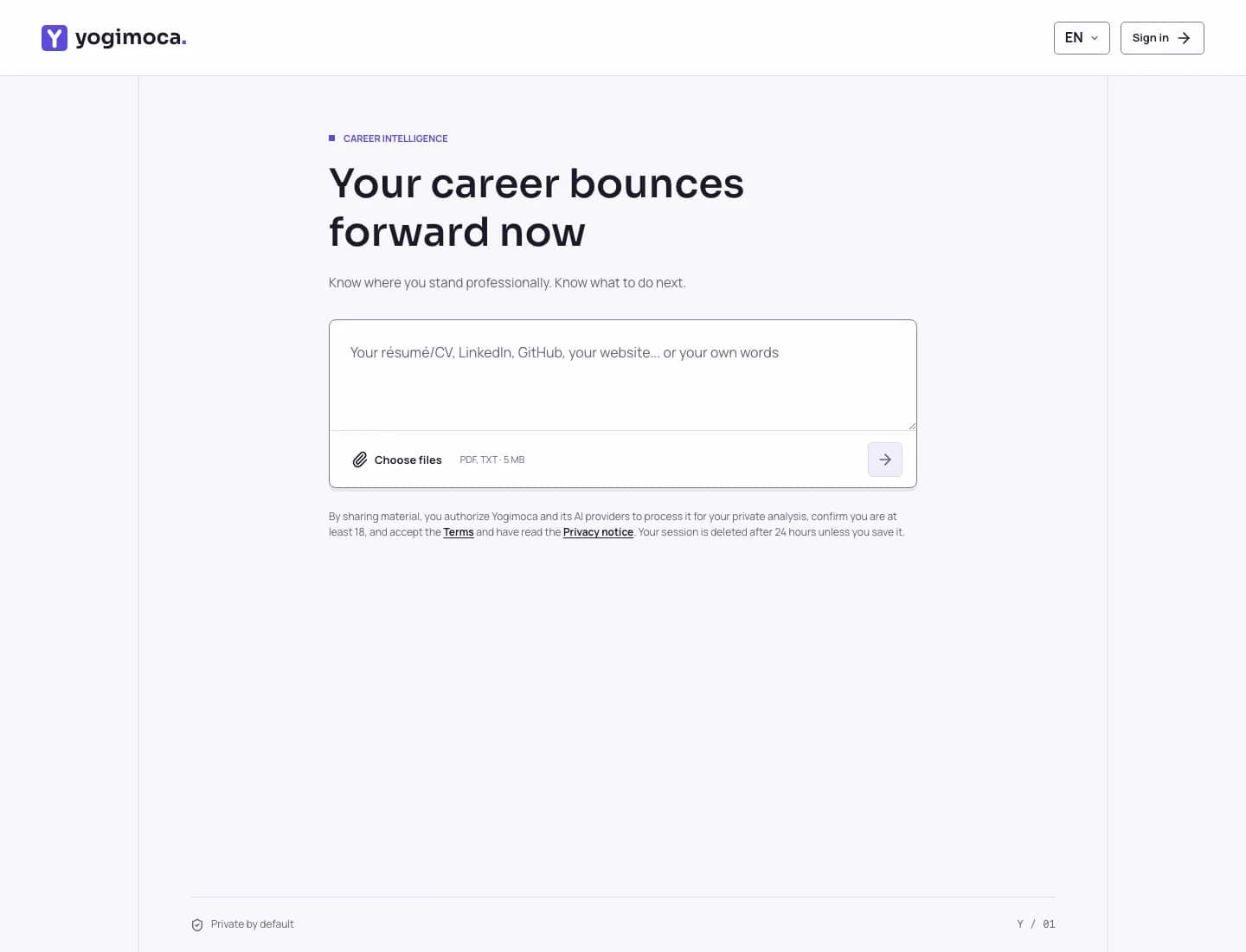
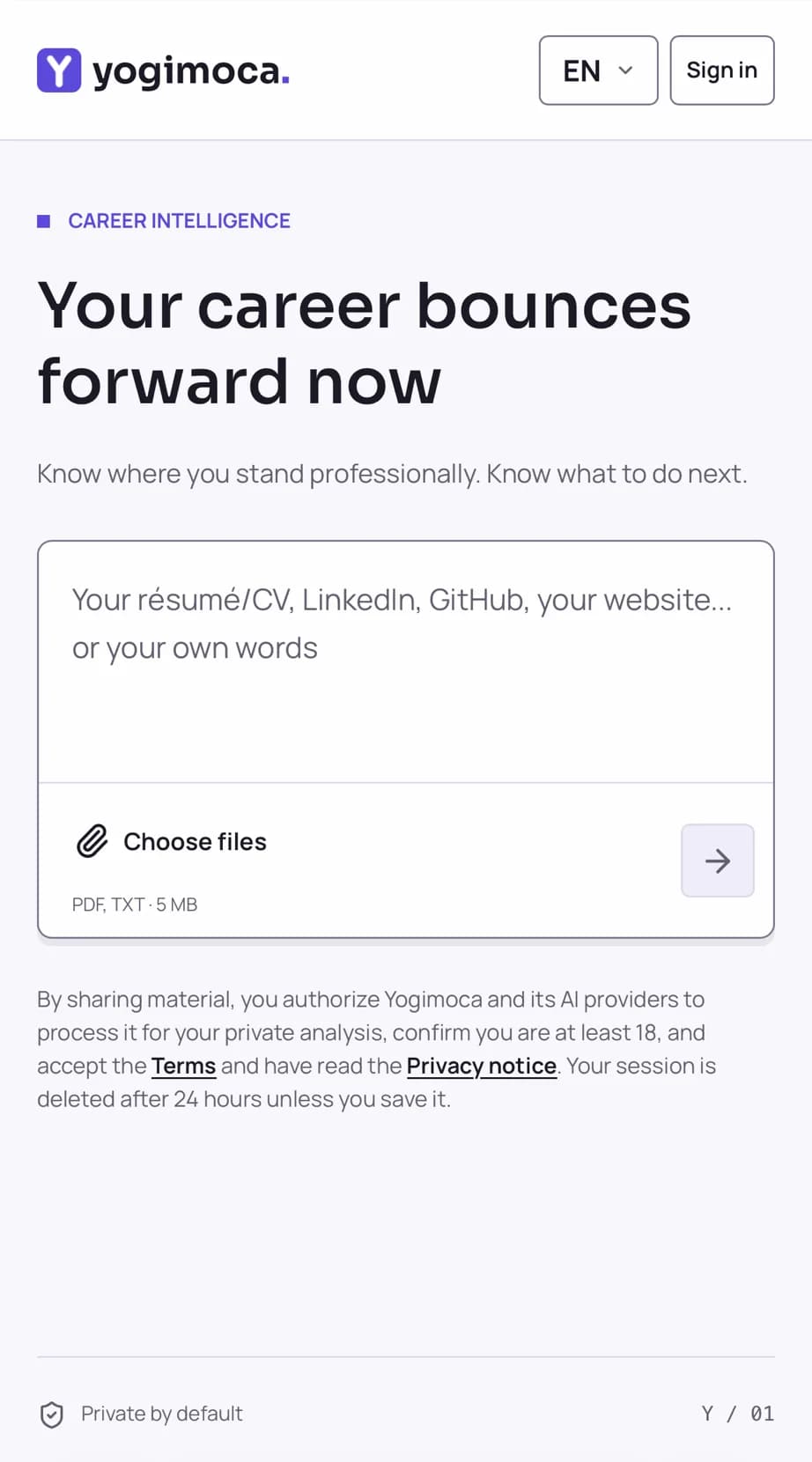
Reality check / users answered back
Built and shipped in September 2026. Early use contradicted parts of the original flow: value had to arrive before optional enrichment, answers had to be centralized, applications needed their own workspaces. The repository records those corrections. Still unproven: organic acquisition, retention and measurable professional outcomes.
Does a reading people can finally see change what they do next?